Warm-waterear washer.
A handheld washer that rinses earwax out with warm water at low pressure. You hold it yourself and can stop at any moment.
On sale soon
Price, product photos and what is in the box will appear here when the washer goes on sale.
Check if it suits youCheck before you wash
Tick anything that applies to you or the person you are buying for.
How to use it
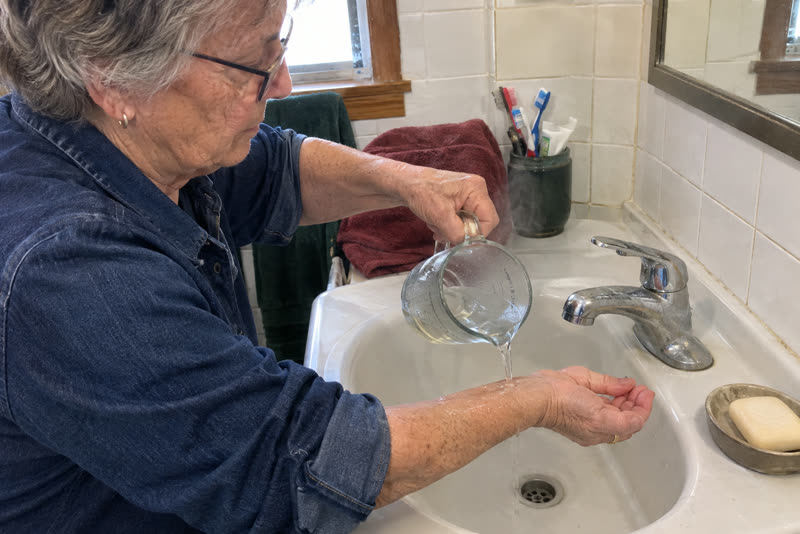

The night before
If the wax is hard, use earwax drops as their label directs. Soft wax comes out more easily.
Fill with warm water
Clean water at about body temperature, 98 °F. Test it on the inside of your wrist.
Sit down
Sit at a table or the bathroom counter with a towel over your shoulder. Take out your hearing aids.
Hold the basin under your ear
Rest the tip at the opening of the ear. Never push it in, and never seal the canal with it.
Rinse on the gentlest setting
Aim along the side of the canal, not straight in. Refill if you need to.
Dry
Tilt your head to let the water out and pat the outer ear with a towel. Do not use cotton swabs.
Stop at once if
you feel pain, dizziness, nausea or ringing, your hearing suddenly drops, or you see blood. Do not try again. See a doctor.
You can help with the wash, and many people do. There are two rules. The person whose ear it is holds the basin and can raise a hand to stop at any moment. Never wash the ear of someone who cannot tell you to stop.
Buying for a parent?
Reviews and buyers' questions
Reserved for product reviews with star breakdown, photos from buyers, and answered questions.
If you wear hearing aids
Hearing aids sit in the canal and stop wax from working its way out, so it builds up faster. Family doctors advise having your ear canals checked every three to six months.7
Take the aids out and put them in their case, then rinse and dry. They go back in once your ears are completely dry.
Check if it suits youFull safety information
- Do not use if you have, or have ever had, a hole (perforation) in your eardrum.
- Do not use if you have ear tubes (grommets).
- Do not use if you have had ear surgery unless your ear doctor has told you it is safe.
- Do not use if you have an ear infection now, or had one in the last few weeks.
- Do not use if you have ear pain, fluid or pus coming from the ear, bleeding, or a rash or broken skin in the ear. See a doctor.
- Sudden hearing loss in one or both ears is a medical emergency. Do not try to wash it out. Get medical care the same day.
- Do not use if you are dizzy or have vertigo and do not know why. See a doctor first.
- If you have diabetes or a weakened immune system, talk to your doctor before using. You have a higher risk of a serious ear infection after ear washing.
- If you take blood thinners, talk to your doctor before using. The ear canal can bleed more easily.
- If you hear with only one ear, do not use this product on that ear. Have a professional remove the wax.
- Talk to your doctor first if you have had radiation treatment to the head or neck, or have a narrow or unusually shaped ear canal.
- For adults only. Not for children.
- Use only clean, warm water at about body temperature (98 °F / 37 °C). Water that is too cold or too hot can make you dizzy or burn you.
- Do not overuse. Earwax protects your ears. Use only when wax is causing a problem.
- If the wax does not clear, or your hearing is not better, after two attempts, stop and see a doctor or hearing professional.
- See a doctor if you have ear pain, itching, discharge or reduced hearing in the days after use. These can be signs of infection.
- Use a clean tip each time. Do not share tips. Empty and dry the water tank after every use.
- Keep out of reach of children.
If it is not wax
Earwax is the simple thing to rule out first, but hearing changes for other reasons too. If two washes make no clear difference, stop. The cause is something else, and the next step is a hearing test.
Hearing that drops suddenly, over hours or a few days, is a medical emergency. Do not try to wash it out. See a doctor the same day.9
Check if it suits you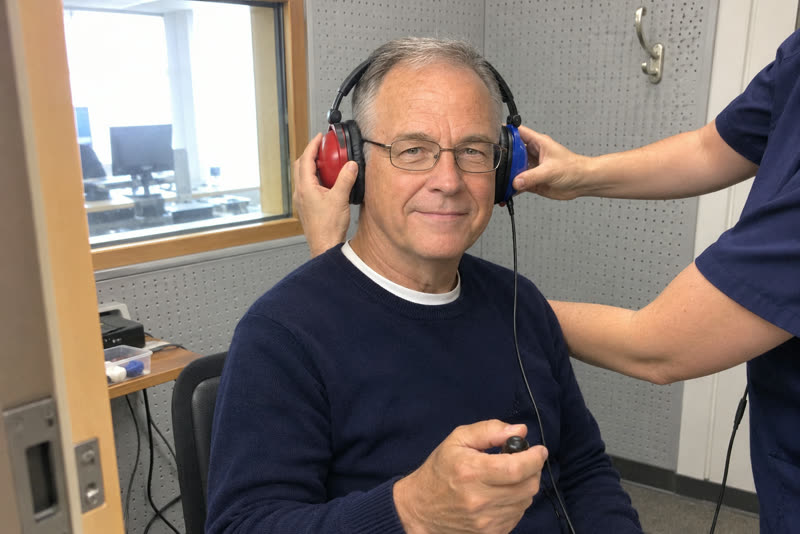
Your questions
Will it hurt my eardrum?
The water is aimed along the side of the ear canal at low pressure, and the tip stays at the opening. Do not use it if you have, or ever had, a hole in your eardrum, ear tubes or ear surgery.
Will it make me dizzy?
Cold water can. Water at about body temperature does not set off that reflex, which is why you test it on your wrist first. If you feel dizzy at any point, stop.
How often should I use it?
Only when wax is causing a problem. Earwax protects the ear, so this is not a daily or weekly routine.
How do I know it is wax?
You cannot be certain without someone looking in your ear. Wax is likely if the ear feels plugged, you wear hearing aids, or a doctor has washed your ears out before. If two washes change nothing, it is not wax.
Can I use it with hearing aids?
Yes. Take them out first and put them back only when your ears are completely dry.
The simplething first.
A warm-water wash is the easiest thing to check. If it is not wax, you will know after two tries, and you will know what to do next.
Check if it suits you