Rule outearwax.
About one in three people over 70 has an ear blocked by wax. Check that before you blame your age. Warm water rinses it out at home.1
See the ear washerBlocked ears are common after 70
It usually starts like this
Most people assume their hearing is going, or that everyone has started to mumble. Earwax rarely comes to mind.
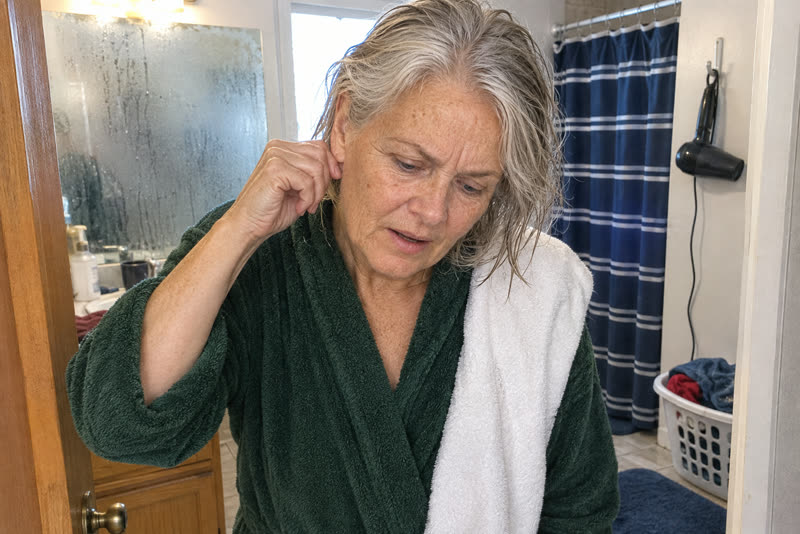
One ear shuts
You step out of the shower and one side sounds far away. You tug at the ear and yawn, and it stays plugged.
The aids go quiet
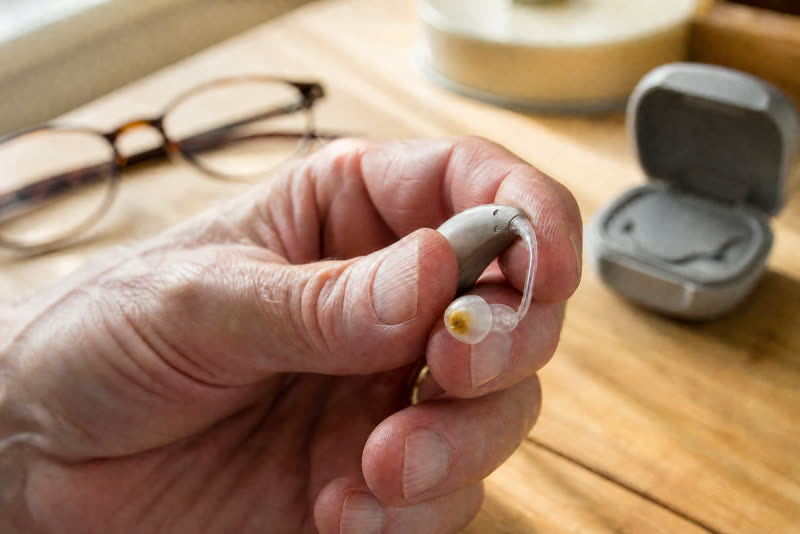
Your hearing aid whistles or cuts out, and the tip is clogged again. Wax is one of the main reasons for repairs.
Another appointment
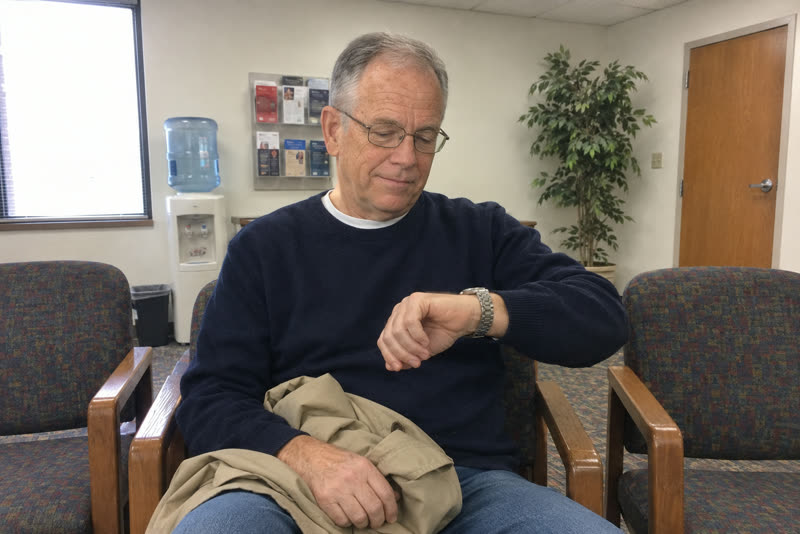
The doctor washes it out in five minutes. A few months later it has built up again, and you are back in the waiting room.
"Say that again?"
Your daughter repeats herself for the third time. You both act as if it does not matter.

What doctors know about earwax
Earwax is normal. It protects the ear canal and usually works its own way out. With age it gets drier and harder, and hearing aids, earbuds and cotton swabs push it back in7. The canal can be up to 80% blocked before you notice anything2. Then a little water gets in during a shower and the ear shuts. In the United States this sends about 12 million people a year to a doctor and leads to nearly 8 million removals3. In a study of older adults, 80% of blocked ears heard better once the wax was out4. A wash with warm water is one of the standard ways to remove it. The US guideline says home washing is an option for most people, as long as the pressure is low2. In a trial of 237 adults, half of those who washed their own ears at home did not need the clinic to do it6.
See how a warm-water wash worksThey thought it was their hearing
Reserved for six short quotes from verified buyers, each with first name, age, city and a photo.
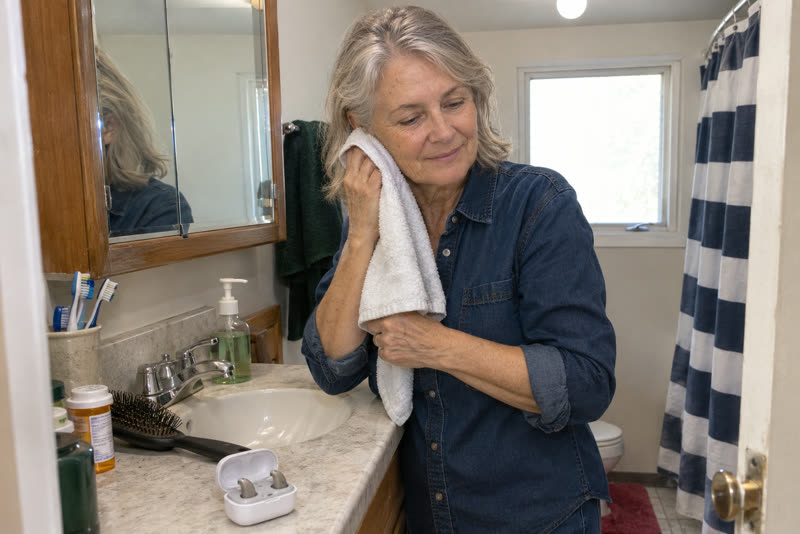
Three steps, sitting down
Fill it with warm water
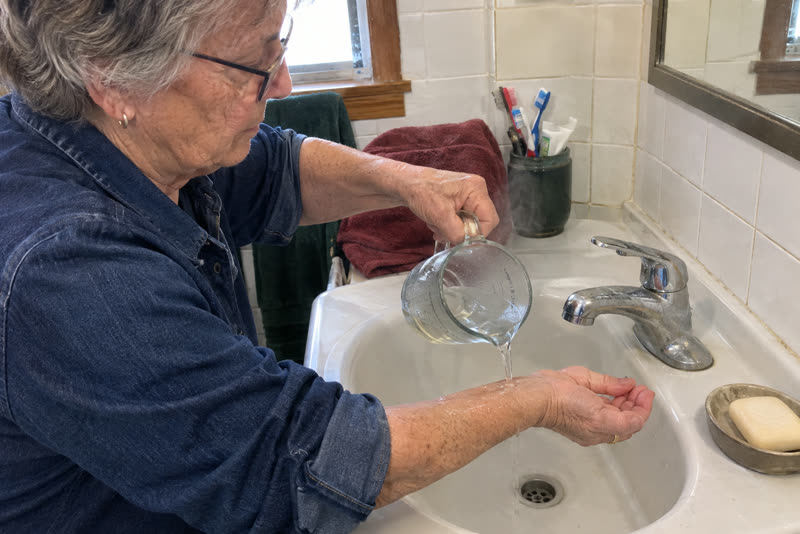
Use clean water at about body temperature, 98 °F. Pour a little over the inside of your wrist first, the way you would test a baby's bottle. If the wax is hard, earwax drops the night before make it come out more easily.
Rinse on the gentlest setting
Sit down and hold the basin under your ear. Rest the tip at the opening of the ear, never deep inside, and aim along the side of the canal. The water gets behind the wax and carries it out into the basin.
Dry your ear and wait
Tilt your head so the water runs out, then pat the outside of the ear with a towel. Do not use cotton swabs. Hearing aids go back in only when your ears are completely dry.
Water close to body temperature does not upset your balance. Cold water in the ear is what makes people dizzy, which is why clinics warm it too.5
Warm, never cold.
The water runs along the wall of the ear canal and comes back out. It is never aimed straight at the eardrum, and the tip stays at the opening.
Along the side.
You hold it and you start it. If you feel pain, dizziness or ringing, stop. Do not try again until a doctor has looked.
You stop it.
What people try first
| What it does | The catch | |
|---|---|---|
| Cotton swabs | Clean the outer ear. | Push wax deeper into the canal, and can injure the eardrum. |
| Drops alone | Soften the wax over a few days. | Soft wax often stays where it is until it is rinsed out. |
| Ear candles | Nothing. In testing they made no suction and removed no wax. | Burns and perforated eardrums. The FDA blocks their import. |
| A wash at the clinic | Removes the wax. A professional looks in your ear first. | An appointment, a fee and, for many people, a return visit every few months. |
| Warm-water wash at home | The same idea as the clinic wash, at low pressure, when you need it. | Nobody looks in your ear first, so the safety check below matters. |
If you wear hearing aids
Hearing aids sit in the canal and stop wax from working its way out, so it builds up faster. Family doctors advise having your ear canals checked every three to six months.7
Take the aids out and put them in their case, then rinse and dry. They go back in once your ears are completely dry.
See the ear washerYou can help with the wash, and many people do. There are two rules. The person whose ear it is holds the basin and can raise a hand to stop at any moment. Never wash the ear of someone who cannot tell you to stop.
Buying for a parent?
See the ear washerReviews from buyers
Reserved for the review wall: 24 verified reviews with star rating, name, age, city, date and photo, with filters for hearing-aid wearers, people who bought for a parent, and reviews in Spanish.
If it is not wax
Earwax is the simple thing to rule out first, but hearing changes for other reasons too. If two washes make no clear difference, stop. The cause is something else, and the next step is a hearing test.
Hearing that drops suddenly, over hours or a few days, is a medical emergency. Do not try to wash it out. See a doctor the same day.9
Check if it suits you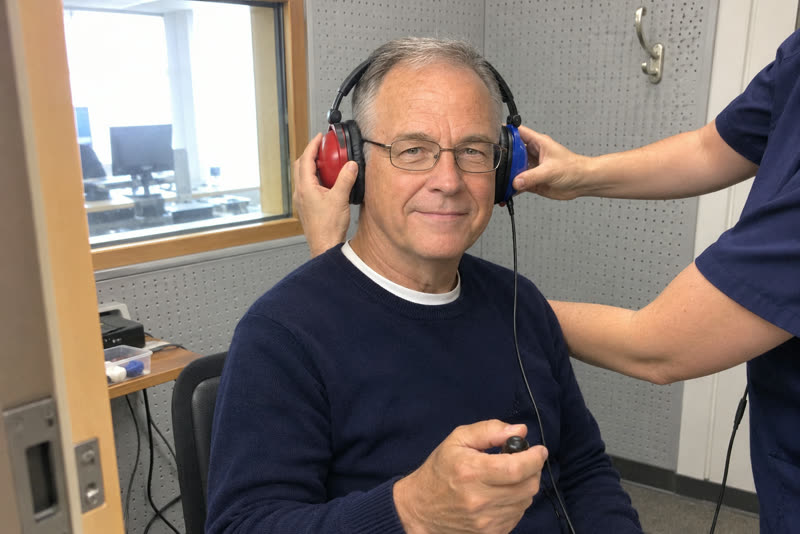
Check before you wash
Tick anything that applies to you or the person you are buying for.
Your questions
Will it hurt my eardrum?
The water is aimed along the side of the ear canal at low pressure, and the tip stays at the opening. Do not use it if you have, or ever had, a hole in your eardrum, ear tubes or ear surgery.
Will it make me dizzy?
Cold water can. Water at about body temperature does not set off that reflex, which is why you test it on your wrist first. If you feel dizzy at any point, stop.
How often should I use it?
Only when wax is causing a problem. Earwax protects the ear, so this is not a daily or weekly routine.
How do I know it is wax?
You cannot be certain without someone looking in your ear. Wax is likely if the ear feels plugged, you wear hearing aids, or a doctor has washed your ears out before. If two washes change nothing, it is not wax.
Can I use it with hearing aids?
Yes. Take them out first and put them back only when your ears are completely dry.
My doctor told me never to put anything in my ear.
That advice is about cotton swabs, hairpins and anything else that goes into the canal. Here the tip stays at the opening and only water goes in. If your doctor has told you not to wash your ears, follow your doctor.
When can I buy it?
Soon. Price, photos and what is in the box will be on the product page when it goes on sale.
The simplething first.
A warm-water wash is the easiest thing to check. If it is not wax, you will know after two tries, and you will know what to do next.
See the ear washer